Last updated: October 23, 2026
What is AI vulnerability management? It is the practice of finding, prioritizing and fixing weaknesses in AI systems, while also handling the vulnerabilities that AI makes faster to find and exploit. It covers three things at once: the AI assets you run, the attackers who use AI, and the defenders who automate their response.
TL;DR: Key Takeaways
- According to CrowdStrike (August 2026), 88% of the exploitation it observed against vulnerabilities with public proof-of-concept code happened within 48 hours of release.
- Forescout (July 2026) counted a 51% year-over-year rise in published vulnerabilities in the first half of 2026, and more than 940,000 exposed AI services.
- HackerOne (May 2026) reports a surge of more than 100% in report volume since February 2026, including duplicates and reports nobody could verify.
- The OWASP Top 10 for LLM Applications 2026 moves excessive agency to third (LLM03) and lifts unbounded consumption four places to sixth (LLM06).
- The OWASP Top 10 for Agentic Applications (December 2025) lists ten agentic risks, ASI01 to ASI10, including agentic supply chain flaws (ASI04).
- A September 2026 working paper from the AI Security Forum and Global Digital Foundation says no formal framework has been agreed yet.
| Role of AI | What changes for you | First control |
|---|---|---|
| AI as an asset | New weaknesses in prompts, tools, models, data and agents | Inventory and testing |
| AI as an attacker | Less time between disclosure and exploitation | Exploit-based prioritization |
| AI as a defender | More findings and reports to triage | Human validation and automation |
Why does AI vulnerability management differ from patching software?
Because many AI weaknesses are not code defects with a patch. A prompt injection, an over-permissioned agent or a poisoned document lives in behavior, data and configuration. The fix is often a runtime control or a permission change, and the weakness can reappear after a model update.
Traditional programs track CVEs against known components, and the numbers are growing. According to Forescout (2026), about 37,000 CVEs were published in the first half of 2026, around 205 per day, and the company says the surge is likely connected to AI-assisted discovery.
| Traditional software | AI systems | |
|---|---|---|
| Unit of weakness | A flaw in a versioned component | A behavior, a permission, a data source or a component |
| Typical fix | Patch or upgrade | Guardrail, permission change, retrained or replaced model, patch |
| Detection | Scanners and advisories | Adversarial testing, runtime monitoring and scanners |
| Regression risk | Low after a patch | High after a model, prompt or tool change |
| Identifier | CVE and CVSS | Often none, so map to OWASP categories |
There is no settled playbook either. According to the working paper from the AI Security Forum and Global Digital Foundation (September 2026), the forum did not agree a formal framework. A fuller version is planned for 2027. The paper frames the work as exposure prevention through governance plus exposure reduction through automated response.
How are attackers and defenders using AI?
Attackers use AI to shorten the path from a disclosed flaw to a working exploit, and defenders use it to triage, test and plan fixes faster. Both sides gain speed, so the advantage goes to the team that can verify findings and act on them quickest.
On the attacker side, speed is the headline. CrowdStrike's 2026 Threat Hunting Report, published August 3, 2026, found that 88% of observed exploitation of vulnerabilities with proof-of-concept code occurred within 48 hours of release. Two China-nexus groups it tracks, VAULT PANDA and GENESIS PANDA, moved within 24 hours of disclosure.
On the defender side, volume is the problem. HackerOne says report volume rose by more than 100% after more advanced AI models and tools arrived in February 2026. It adds that many AI-assisted reports were duplicates or could not be verified. HackerOne responded with routing by skill and severity and with agents for deduplication and escalation, while keeping human analysts in the loop.
| Pressure | Evidence | What it means for your program |
|---|---|---|
| Exploit speed | 88% of PoC-backed exploitation within 48 hours (CrowdStrike, 2026) | Decide containment before the patch exists |
| Disclosure volume | CVEs up 51% year over year (Forescout, 2026) | Prioritize by exploitability, not by count |
| Report noise | More than 100% more reports (HackerOne, 2026) | Validate before you escalate |
| Exposed AI services | More than 940,000 (Forescout, 2026) | Find your own exposed endpoints first |
How we assessed the evidence
We used dated primary publications from the vendors and standards bodies named, and dropped any figure we could not trace to its origin.
How do you discover and inventory your AI assets?
Start with what you cannot yet see: every model, prompt, tool, MCP server, agent, vector store and AI-enabled SaaS feature in use. A vulnerability you cannot attach to an asset cannot be ranked, assigned or closed, so the inventory is the first deliverable.
The AI Security Forum paper asks operators to keep accurate inventories. Forescout's count of more than 940,000 exposed AI services, which it says more than doubled since February, shows how easily AI endpoints end up on the internet by accident.
For each asset record an owner, the data it can reach, the tools it can call and the permissions it holds. OWASP's 2026 supply chain guidance (LLM04) goes further. It points to signed software and AI bills of materials, plus a patching policy that keeps components, APIs and models on maintained versions.
| Asset | What to record | Typical weakness |
|---|---|---|
| Model and version | Provider, version, fine-tunes, adapters | Tampered or substituted artifacts (LLM04) |
| System prompt and policy | Location, owner, change history | Hidden context exposure (LLM08) |
| Tools and MCP servers | Scopes, credentials, owner | Tool misuse (ASI02), excessive agency (LLM03) |
| Data sources and vector stores | Classification, access rules | Poisoning (LLM05), embedding weaknesses (LLM09) |
| Agents | Autonomy level, identity, memory | Goal hijack (ASI01), rogue behavior (ASI10) |
How do you map AI vulnerabilities to the OWASP 2026 lists?
Map each finding to an OWASP category, then to an action. The 2026 LLM list gives you a shared vocabulary for model-level risk, and the agentic list covers what happens when models act. Use both, because most real incidents cross the two.
The OWASP Top 10 for LLM Applications 2026 keeps prompt injection first and sensitive information disclosure second. Excessive agency climbs to third, unbounded consumption rises four places to sixth, and improper output handling falls from fifth to tenth. System prompt leakage is replaced by the broader Hidden Context Exposure (LLM08).
| 2026 entry | Movement versus 2025 | Vulnerability management action |
|---|---|---|
| LLM01 Prompt Injection | Stays first | Test every input path, including retrieved content and tool output |
| LLM02 Sensitive Information Disclosure | Stays second | Classify data each AI asset can reach and scan outputs |
| LLM03 Excessive Agency | Up to third | Remove unused tools and permissions, require approval for high-impact actions |
| LLM04 Supply Chain | Down one place | Keep an AI bill of materials and a patching policy for models and dependencies |
| LLM06 Unbounded Consumption | Up four places | Set token, rate and cost limits, and keep serving frameworks updated |
| LLM08 Hidden Context Exposure | Replaces system prompt leakage | Treat prompts and tool schemas as exposed and keep secrets out of them |
| LLM10 Improper Output Handling | Down to tenth | Validate model output before downstream systems act on it |
The agentic Top 10 from December 2025 adds risks that a model-only view misses. They include agent goal hijack (ASI01), tool misuse (ASI02), identity and privilege abuse (ASI03), agentic supply chain (ASI04), memory and context poisoning (ASI06) and rogue agents (ASI10). If you run agents with memory, our guide to memory and context poisoning shows how one planted instruction persists across sessions.
How do you test AI systems for vulnerabilities?
Combine conventional scanning with adversarial testing. Scanners find known flaws in components, while adversarial tests try to make the system misbehave through prompts, tools and data. Run both before release and again after every model, prompt or tool change, so regressions surface early.
Adversarial testing needs coverage across attack types, not one clever jailbreak. Include direct and indirect prompt injection, multi-turn manipulation, data extraction, tool abuse and malformed output. AI Red Teaming (TrustTest) from NeuralTrust automates tests across these attack types. It runs them in CI/CD so a failed attack can block a merge, and compares results run over run to show whether a fix held.
Refresh attack sets as new techniques appear, because a static suite proves little. AI can also generate many plausible but false vulnerability hypotheses, as the working paper notes, so every automated finding needs a reproduction before it enters the queue.
How should AI vulnerability management prioritize risk?
Rank by whether a weakness can actually be exploited in your deployment, how exposed it is, and how much damage the affected system can do. A critical score on an isolated test model matters less than a medium issue on an agent with write access to production.
The working paper argues for assessing real attack paths instead of counting entries. The CISA Known Exploited Vulnerabilities catalog lists flaws seen exploited in the wild, and Forescout reports that KEV additions rose 11% year over year in the first half of 2026. CVSS v4.0 lets you adjust a base score with threat and environmental metrics.
For AI systems, add one factor that CVSS does not capture well: agency. The same prompt injection is a nuisance in a chatbot with no tools and an incident in an agent that can send email or change records.
| Factor | Question to ask | Raises priority when |
|---|---|---|
| Exploit evidence | Is it in KEV, has public proof-of-concept code, or is it in active use? | Yes to any |
| Exposure | Is the endpoint reachable from the internet or by untrusted content? | Yes |
| Agency | What can the system do if manipulated? | It writes, spends or sends |
| Data | What is the most sensitive data it can reach? | Regulated or confidential data |
| Compensating control | Is a runtime guardrail or approval step already in place? | No |
As a starting point, contain anything with exploit evidence and high agency within 48 hours, mirroring CrowdStrike's finding, and schedule the rest by risk.
How do you contain, fix and disclose AI vulnerabilities?
Contain first, fix second, disclose third. You often cannot patch a model in a day, but you can narrow permissions, add a runtime guardrail or disable a tool within hours. Then fix the root cause and tell affected parties through a defined process.
For containment, think in layers. Remove the tool, tighten the scope, add an approval step, or place an inspecting control between the model and everything it touches. The working paper describes independent guardrails and firewall-style layers that inspect prompts, responses and agent actions, and it calls for layered, real-time defense. Our guide to human-in-the-loop oversight covers when approval is worth its friction.
For fixes, expect a mix of patches, configuration changes and model changes, and retest after each. For disclosure, reuse what exists. The paper points to ISO/IEC 29147 and 30111 for disclosure and vulnerability handling, and to CSAF for machine-readable advisories. It also references ETSI EN 304 223 (V2.1.1, December 2025) as a baseline for AI security requirements.
Keep people accountable. The paper says humans should stay responsible for asset identification, risk assessment, patch approval, compliance evidence and governance decisions, even when AI orchestrates the workflow.
Security and governance: what do AI vulnerabilities look like in practice?
They look like trusted text that changes what an agent does, tools with more access than their task needs, and dependencies nobody tracked. The controls are the same as above, applied at runtime, and each maps to an OWASP entry you can report against.
| Risk | How it shows up | Control |
|---|---|---|
| Prompt injection (LLM01) | Instructions hidden in a document, page or tool result | Inspect inputs and tool results before the agent acts |
| Excessive agency (LLM03, ASI02) | An agent holds tools and scopes beyond its task | Least privilege and approval for high-impact actions |
| Supply chain (LLM04, ASI04) | A tampered model, adapter or tool package | Bill of materials, pinned versions, patching policy |
| Memory poisoning (ASI06) | A planted instruction persists across sessions | Review memory writes and expire stale entries |
| Hidden context exposure (LLM08) | A reply reveals system instructions or tool schemas | Output inspection and secret-free prompts |
NeuralTrust covers three of these steps in its Runtime Security Mesh platform. Agent Posture Management (TrustLens) builds the inventory, including agents nobody registered, tracks configuration changes, scores risk and lists prioritized remediation steps. Agent Runtime Security (TrustGuard) enforces policy inline on inputs and outputs, with allow, block or transform decisions, and catches prompt injection and poisoned tool results, with findings linked to traces. TrustTest, described above, shows which attacks still succeed after a fix. TrustGuard runs as SaaS, hybrid or on-premises.
Governance needs evidence as well as controls. Keep the inventory, test results, containment decisions and approvals in one auditable record.
Which approach fits your team?
Match the program to your maturity. Start with an inventory and OWASP-mapped tests, add runtime controls where agents can act, and add disclosure and audit evidence if you are regulated. The table gives a sensible first step and next step for each kind of team.
| Team | Start with | Add next |
|---|---|---|
| Early AI adopter with a few apps | A spreadsheet inventory, OWASP-mapped tests before each release | Runtime guardrails on the highest-agency app |
| Platform team running agents | Automated inventory, CI/CD adversarial tests, tool allow-lists | Exploit-based triage and approval workflows |
| Regulated enterprise | Inventory with owners, AI bill of materials, audit trail | Disclosure process aligned to ISO/IEC 29147 and 30111 |
Conclusion
AI vulnerability management works when you treat AI as an asset to inventory, an attacker to outpace and a defender to supervise. Exploitation follows disclosure in hours and no formal framework is agreed yet. Build your own loop: discover, test, prioritize by exploitability and agency, contain first, then fix and disclose, mapping each finding to OWASP 2026.
Secure AI Systems in Production with NeuralTrust
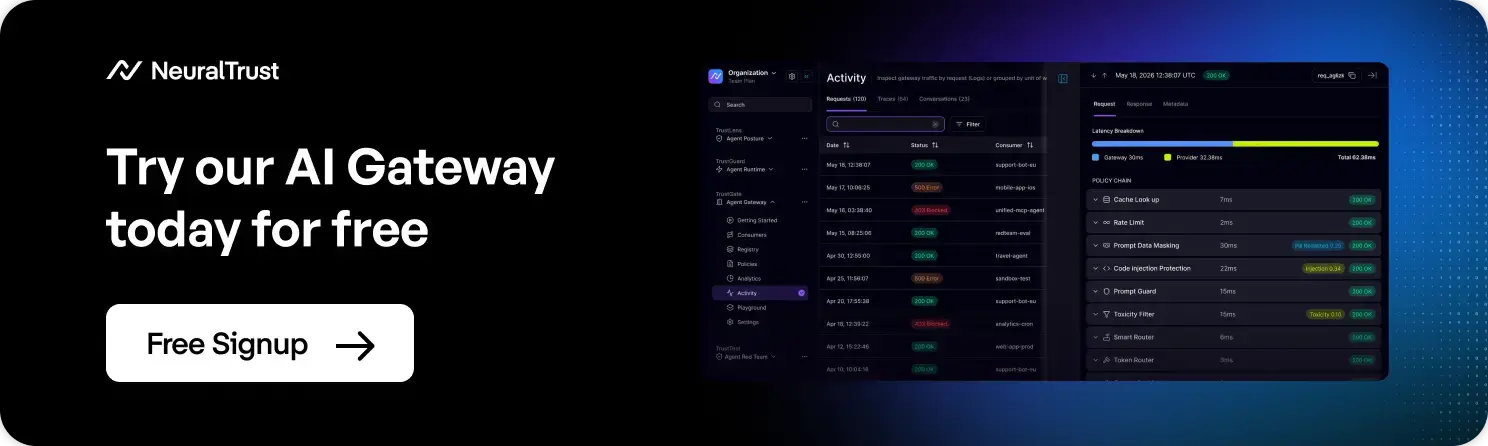
Find your AI assets, test them and enforce policy at runtime. Start free with the AI Gateway and put controls in front of your first agent today.
Related Reading
- AI gateway for agentic AI
- Memory and context poisoning
- MCP authentication
- Human-in-the-loop AI agents
FAQs about AI Vulnerability Management
1. What is AI vulnerability management?
It is the process of finding, prioritizing and fixing weaknesses in AI systems, and of handling vulnerabilities that AI helps attackers find faster. It covers models, prompts, tools, agents and data, alongside conventional software components. The goal is to contain risk quickly and keep fixes from regressing.
2. How is it different from traditional vulnerability management?
Traditional programs track CVEs in versioned components and fix them with patches. AI weaknesses often sit in behavior, permissions and data, have no CVE and can return after a model update. The fix is frequently a runtime control or a permission change.
3. Is there a standard framework for it?
Not yet. The AI Security Forum working paper from September 2026 says its forum did not agree a formal framework, and fuller work is planned for 2027. Meanwhile you can combine the OWASP LLM and agentic lists, ETSI EN 304 223 and existing disclosure standards such as ISO/IEC 29147.
4. Can you patch an AI model?
Sometimes. Open-source components and serving frameworks can be patched, and a provider can release a safer model version. Behavioral weaknesses such as prompt injection usually need layered mitigations instead: guardrails, narrower permissions and approval steps. Retest after each change, since updates can reopen closed issues.
5. How fast do attackers exploit new vulnerabilities?
Very fast. CrowdStrike's 2026 Threat Hunting Report found that 88% of the exploitation it observed against vulnerabilities with public proof-of-concept code happened within 48 hours of release. Some groups acted within 24 hours of disclosure. Plan to contain risky exposure before a patch is ready.
6. What should an AI asset inventory include?
List models and versions, system prompts, tools and MCP servers, data sources, agents and AI-enabled SaaS features. For each, record an owner, the data it can reach, the tools it can call and its permissions. Include unregistered agents and endpoints too.
7. Does AI-driven discovery mean more work for security teams?
Yes, at least at first. Forescout counted a 51% rise in published vulnerabilities in the first half of 2026, and HackerOne reports more than 100% more reports, many duplicates or unverifiable. Teams cope by prioritizing on exploitability and requiring a reproduction before escalation.
8. How does OWASP help with AI vulnerability management?
OWASP gives you shared categories to map findings to. The 2026 LLM list covers model-level risks such as prompt injection, excessive agency and supply chain. The agentic list covers risks that appear when agents act, such as tool misuse and memory poisoning.
About the Author
Roger Howroyd is Head of Global SEO and AI at NeuralTrust, where he leads the company's search strategy across SEO, AEO, GEO, and LLM optimization. He specializes in AI-powered search, content strategy, and SEM. Connect on LinkedIn.
NeuralTrust is the leading platform for securing and scaling AI agents. Named a Pioneer in the Gartner Emerging Market Quadrant for AI Application Security 2026, recognized across four Gartner Hype Cycle reports in 2026, and featured in the Gartner Market Guide for Guardian Agents 2026, the Gartner Market Guide for AI Gateways 2025 and the KuppingerCole Leadership Compass for Generative AI Defense 2025. Headquartered in Barcelona with offices in London and New York. ISO 27001 certified.
Sources
- CrowdStrike, 2026 Threat Hunting Report: AI is Now Embedded Across Modern Adversary Operations (August 3, 2026)
- HackerOne, Navigating the AI Wave: How We're Keeping Security Research Meaningful (May 29, 2026)
- Forescout Vedere Labs, 2026H1 Threat Review (July 21, 2026)
- OWASP GenAI Security Project, OWASP Top 10 for LLM Applications 2026 (August 2026)
- OWASP GenAI Security Project, Top 10 for Agentic Applications (December 9, 2025)
- Global Digital Foundation and AI Security Forum, AI-era Vulnerability Management working paper (September 2026)
- ETSI, EN 304 223 V2.1.1, Securing Artificial Intelligence: Baseline Cyber Security Requirements for AI Models and Systems (December 2025)
- CISA, Known Exploited Vulnerabilities Catalog (continuously updated)
- FIRST, Common Vulnerability Scoring System v4.0 (version 4.0)