Last updated: October 27, 2026
What are the best OpenClaw alternatives in 2026? For most teams the shortlist is Hermes Agent for memory and flexible sandboxing, NanoClaw for one container per agent, ZeroClaw for a small Rust binary, and IronClaw for a WebAssembly sandbox. People switch mainly because of OpenClaw's security record: a one-click remote code execution flaw and hundreds of malicious skills in its registry.
TL;DR: Key Takeaways
- OpenClaw had a critical flaw. The Hacker News (February 2, 2026) reported CVE-2026-25253, CVSS 8.8, fixed in version 2026.1.29 on January 30, 2026.
- Its skill registry was abused. Koi Security's ClawHavoc findings counted 341 malicious skills out of 2,857 audited, and 335 installed Atomic Stealer on macOS.
- Sandboxing is opt-in. The official sandboxing docs say it is off by default and "not a perfect security boundary," and the Gateway process always stays on the host.
- Hermes Agent offers the most isolation choices. Its GitHub README lists seven terminal backends, including Docker, SSH, Modal and Daytona.
- NanoClaw isolates by design. Its documentation and README describe each agent group running in its own Linux container and seeing only what is mounted.
- The risks map to OWASP. The OWASP Top 10 for LLM Applications 2026 (August 3, 2026) ranks Excessive Agency third and covers Supply Chain as LLM04.
Key Facts at a Glance
| Option | Best for | Isolation approach | License | Language |
|---|---|---|---|---|
| OpenClaw (baseline) | Widest channel and skill ecosystem | Sandbox off by default; Gateway runs on the host | See project repository | See project repository |
| Hermes Agent | Learning memory and choice of sandbox | Seven terminal backends, command approval, DM pairing | MIT | Python core |
| NanoClaw | Small, auditable personal agent | One Linux container per agent group | MIT | TypeScript |
| ZeroClaw | Low footprint on modest hardware | Sandboxing, allowlists and workspace scoping; supervised by default | MIT or Apache 2.0 | Rust |
| IronClaw | Untrusted tools and secret protection | WebAssembly sandbox; secrets injected at the host boundary | Apache 2.0 or MIT | Rust |
Why Do People Look for OpenClaw Alternatives?
OpenClaw is an open-source, self-hosted personal AI agent, also known earlier as Clawdbot and Moltbot. A long-running Gateway connects chat apps to a model and gives it tools. Teams look for alternatives because its defaults and ecosystem exposed real users to real attacks in early 2026.
Two incidents explain most of the interest. The first was CVE-2026-25253. According to The Hacker News (2026), the Control UI accepted a gatewayUrl from the query string without validation and sent the stored gateway token to it. Clicking a malicious link was enough, and the attack worked even when the Gateway listened only on loopback, because the victim's browser made the connection. An attacker holding the token could turn off approval prompts and move command execution from the Docker sandbox to the host.
The second was ClawHavoc. Koi Security audited 2,857 skills on ClawHub and found 341 malicious ones, according to the same outlet (February 2, 2026). Of those, 335 used fake prerequisites to install Atomic Stealer on macOS, and others hid reverse shells or exfiltrated credentials. OpenClaw's creator responded with a reporting feature that auto-hides skills after more than three unique reports.
| What happened | Evidence | Why it matters for your choice |
|---|---|---|
| One-click remote code execution | CVE-2026-25253, CVSS 8.8, fixed January 30, 2026 | Local-only binding did not protect against a browser-driven attack |
| Malicious skills | 341 of 2,857 audited skills (Koi Security, 2026) | A skill is code with your agent's permissions |
| Opt-in sandbox | Off by default (OpenClaw docs) | The safe setup is something you must configure |
| Single trust boundary | Not a hostile multi-tenant boundary (OpenClaw docs) | Mixed-trust users need separate gateways |
None of this makes OpenClaw unusable. The project is actively maintained, and its documentation shows version 2026.10.7 as the latest release. Its security page also documents safer defaults: loopback binding on host installs, pairing codes for unknown direct-message senders, and an openclaw security audit command that checks for drift. The question is whether those defaults fit how you will run the agent.
What Should You Look for in an Alternative?
Look at six things: how the agent is isolated, how it holds credentials, how you vet skills, how it remembers, which channels and models it supports, and when it asks for approval. Security-minded teams should weigh the first three most, because they decide what a compromised agent can reach.
| Criterion | Question to ask | Why it matters |
|---|---|---|
| Isolation | Does the agent run in a container, WebAssembly sandbox or on the host? | Limits damage from a bad tool call or skill |
| Credentials | Does the agent ever hold raw API keys? | Stolen keys outlive any single session |
| Skills and plugins | Who can publish them, and are they scanned? | Skills are the supply chain |
| Memory | Plain files, SQLite or a database? Who can read it? | Memory persists instructions and sensitive data |
| Channels and models | Which chat apps and which providers? | Decides fit and switching cost |
| Approvals | Does it pause before risky commands? | Your last line of control |
How Do the Best OpenClaw Alternatives Compare?
Four open-source options stand out in October 2026, each with a different strength: Hermes Agent for learning and sandbox choice, NanoClaw for container isolation, ZeroClaw for footprint, and IronClaw for WebAssembly sandboxing. The right pick depends on your threat model more than on feature counts.
1. Hermes Agent
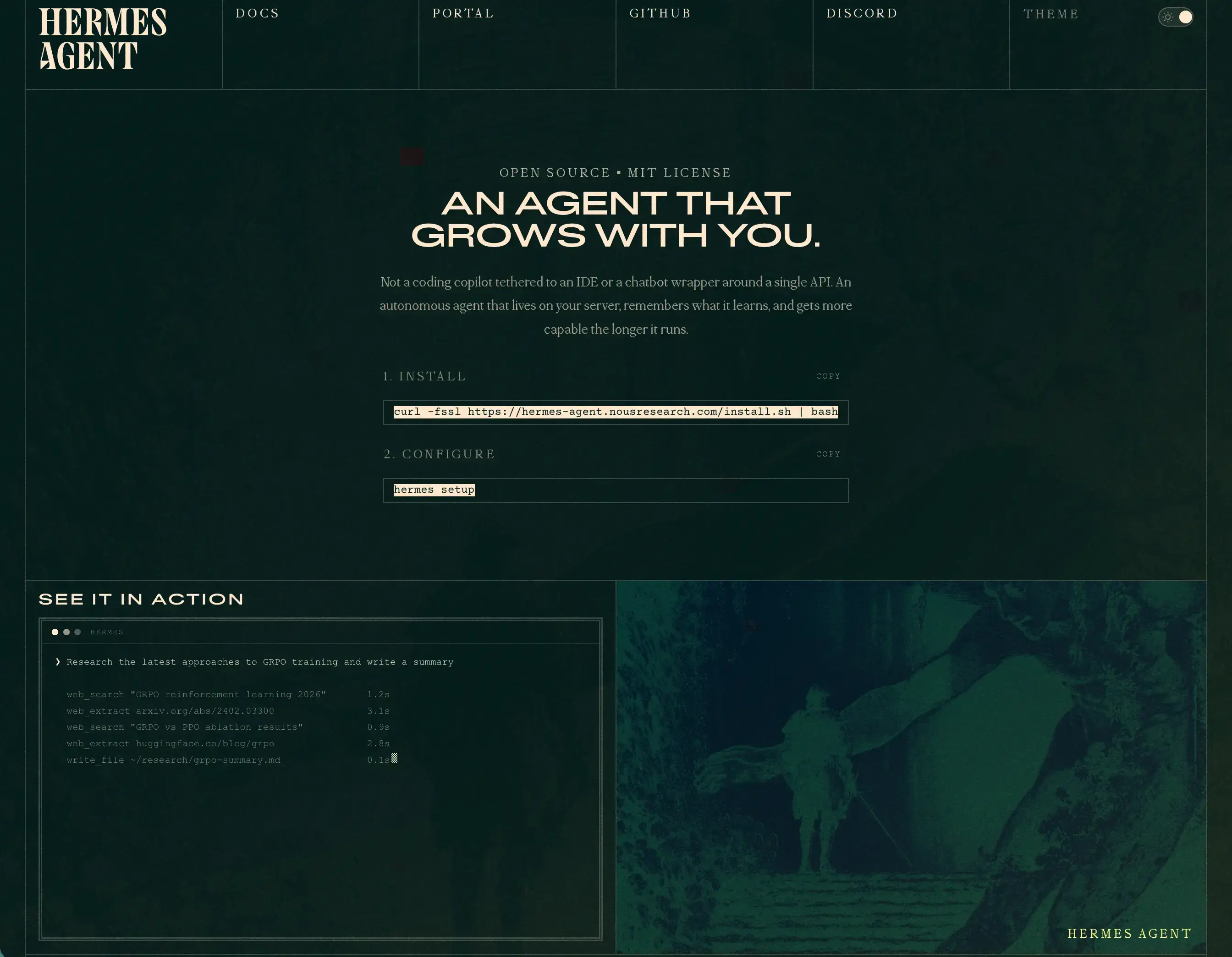
Hermes Agent comes from Nous Research and is MIT licensed. According to its README (2026), it creates skills from completed tasks, saves knowledge across sessions and searches past conversations using SQLite full-text search. One gateway process serves the command line, Telegram, Discord, Slack, WhatsApp, Signal and email.
Where it wins: sandbox choice and memory. The README lists seven terminal backends (local, Docker, SSH, Singularity, Modal, Daytona and Vercel Sandbox), and the docs index lists command approval and DM pairing. Trade-off: isolation depends on the backend you pick, and the local backend runs on your machine. Our guide to Hermes Agent security covers its risks in detail.
2. NanoClaw
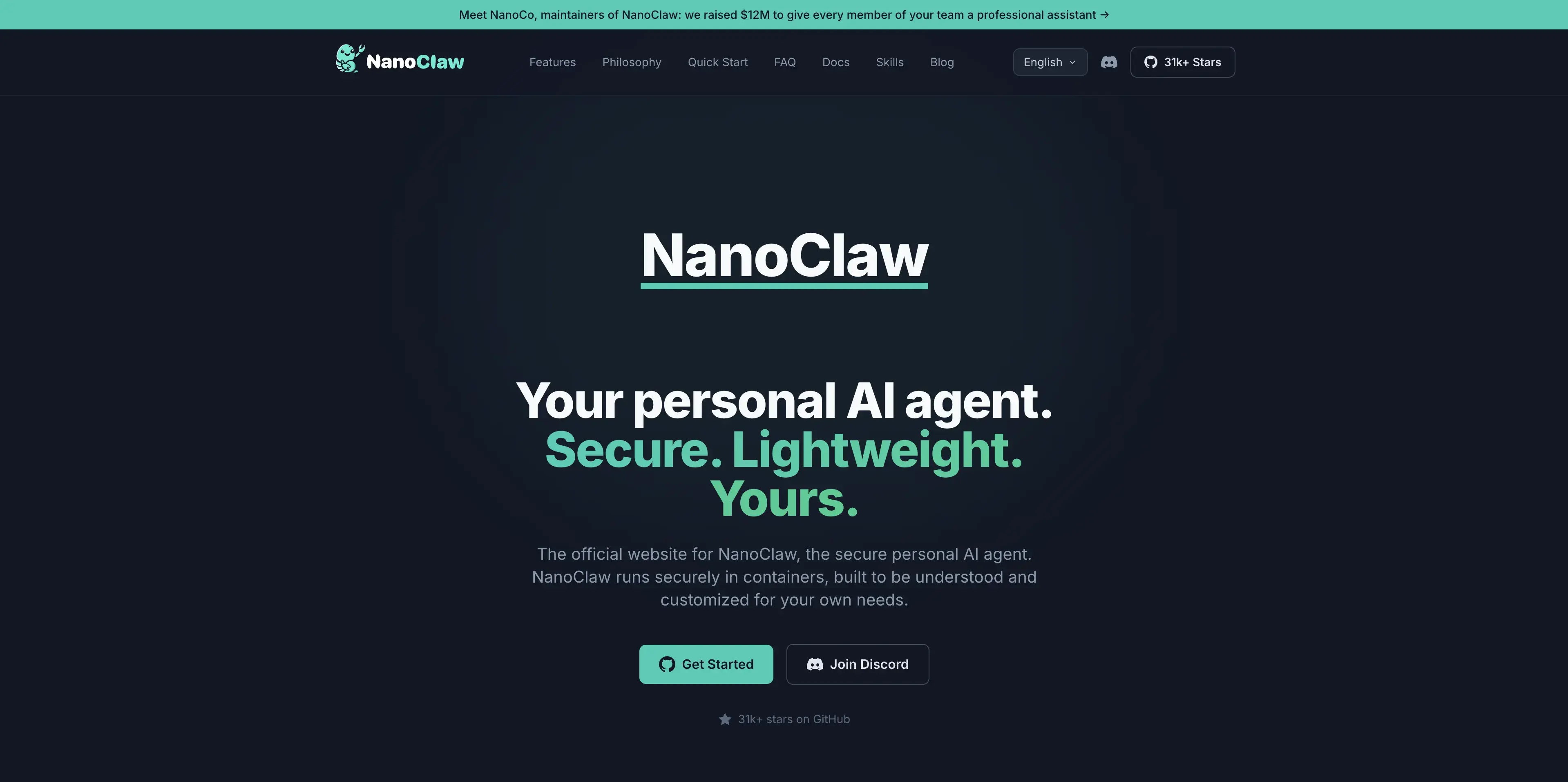
NanoClaw is MIT licensed and built for a small codebase you can read. Per its README (2026), each agent group runs in its own Linux container and can see only what is explicitly mounted. Agents never hold raw API keys. A credential gateway injects them at request time and enforces per-agent policies and rate limits.
Where it wins: isolation by default and auditability. It supports WhatsApp, Telegram, Discord, Slack, Teams, iMessage, Matrix and email, among others, with Claude as the native model and others added through skills. Trade-off: it needs Docker, runs on Mac or Linux (Windows through WSL), and its own docs caution that a sandbox is one part of the security model, not a guarantee.
3. ZeroClaw
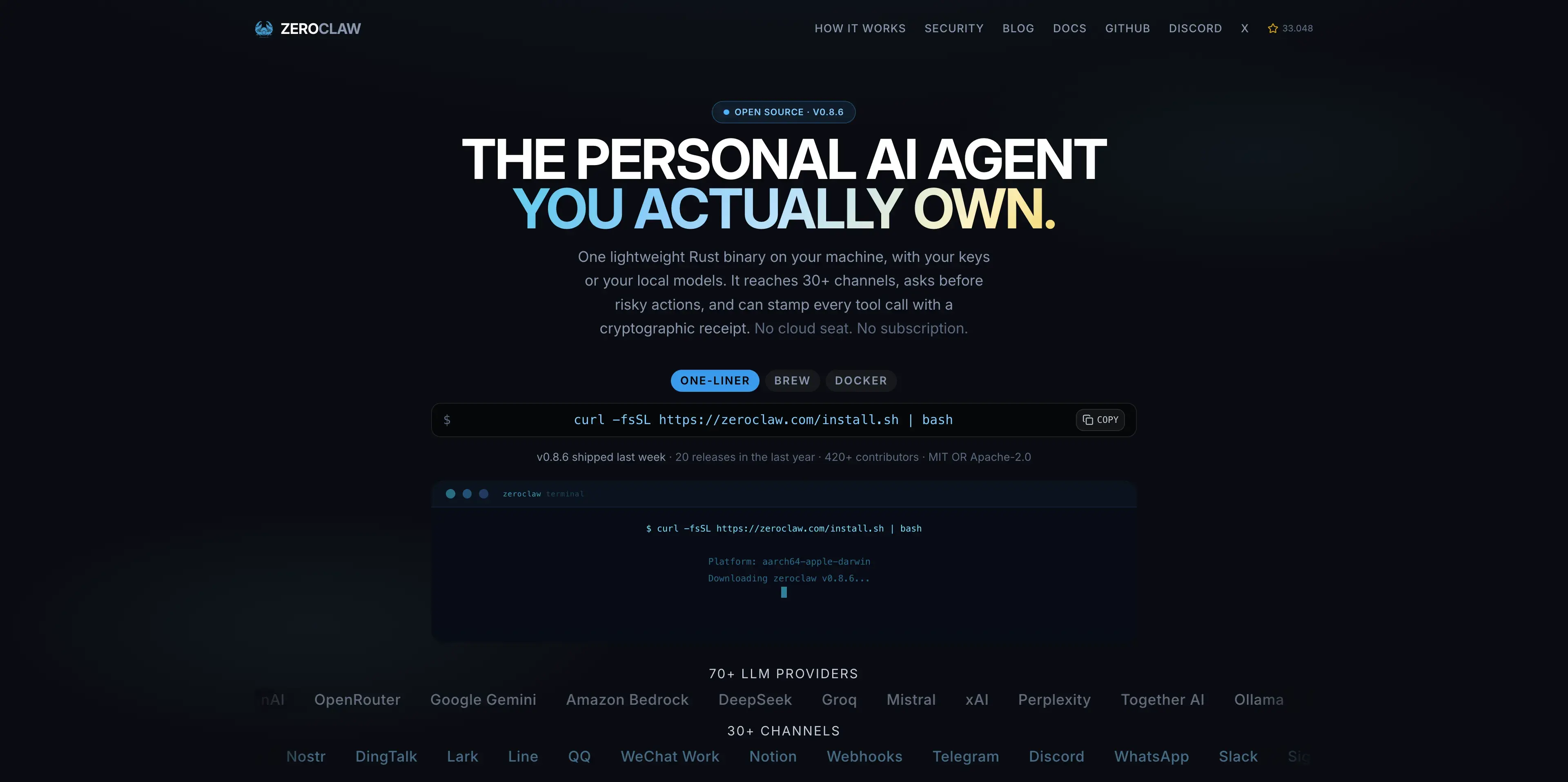
ZeroClaw is written in Rust and dual licensed under MIT and Apache 2.0. According to Pinggy (2026), it ships as a single binary of about 8.8 MB, uses under 5 MB of RAM, and defaults to a supervised autonomy level with sandboxing, explicit allowlists and workspace scoping. Pinggy's figures are the article's own and are not independently verified.
Where it wins: footprint and a conservative default. Trade-off: the same article showed version 0.1.7, which suggests an early-stage project, and it describes ZeroClaw as still catching up on features. Check the repository's current release before relying on it.
4. IronClaw
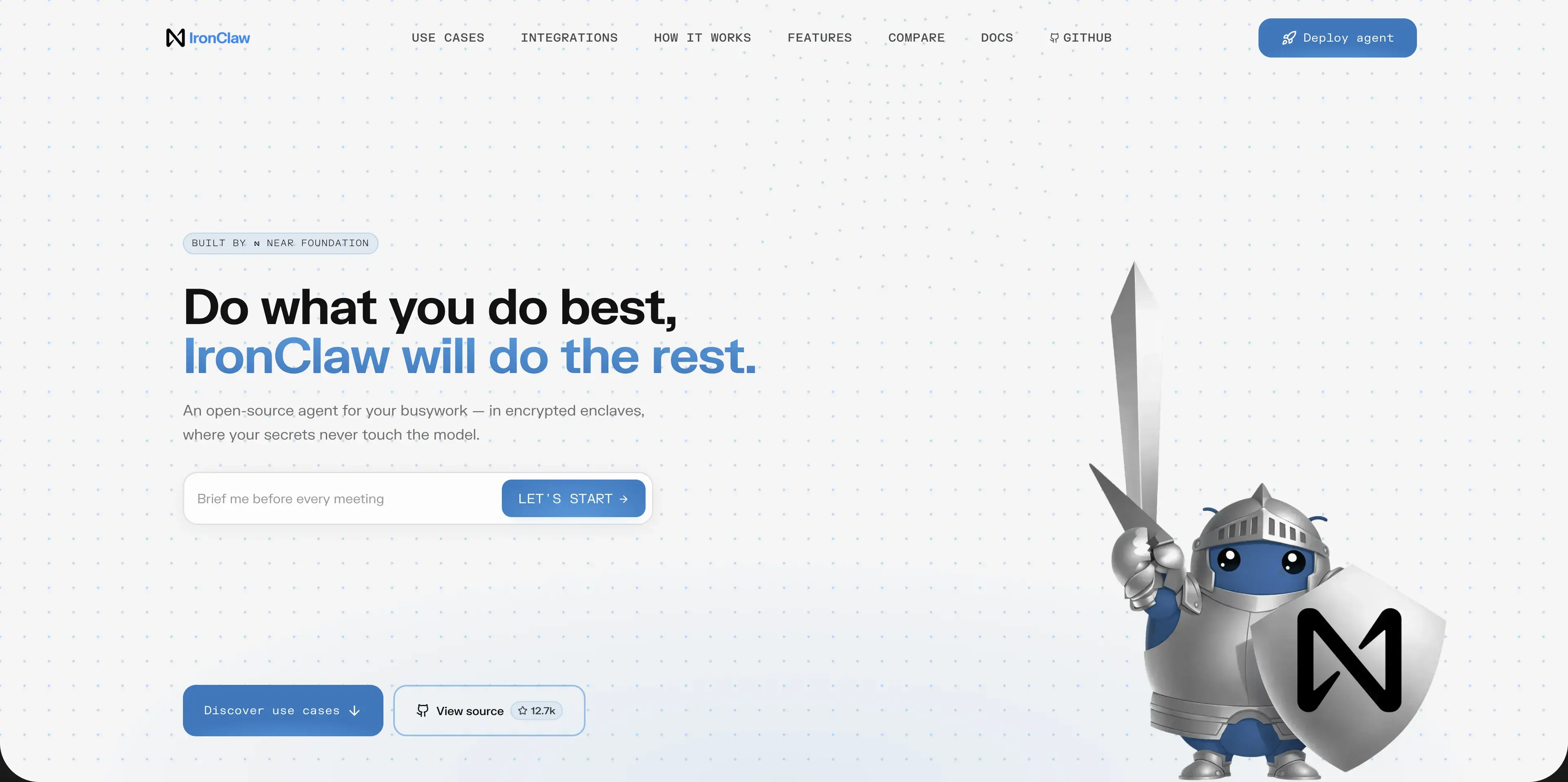
IronClaw is a Rust reimplementation of the OpenClaw idea from NEAR AI, open-sourced on February 3, 2026 under Apache 2.0 or MIT. According to a project catalog entry (2026), untrusted tools run in WebAssembly containers with explicit permissions, HTTP access is limited to approved hosts and paths, and secrets are injected at the host boundary so tools never see them.
Where it wins: untrusted-tool containment and secret handling. It stores data locally in PostgreSQL and works with any OpenAI-compatible endpoint, including Ollama and vLLM. Trade-off: the channel list is shorter (REPL, webhooks, Telegram, Slack and a web gateway), and it defaults to NEAR AI as the provider.
How we compared
We used the official documentation or README for each project where we could reach it, dated third-party sources otherwise, and labeled vendor-published figures as such. We did not run hands-on benchmarks. Feature lists change quickly, so confirm current versions before you commit.
| Hermes Agent | NanoClaw | ZeroClaw | IronClaw | |
|---|---|---|---|---|
| Isolation | Seven backends, your choice | Container per agent group | Sandbox, allowlists, workspace scope | WebAssembly sandbox |
| Credentials | Not detailed in the README | Injected by a credential gateway | Not covered in our sources | Injected at host boundary |
| Memory | Agent-curated, SQLite search | Per-agent files | Not covered in our sources | PostgreSQL, full-text and vector |
| Channels | CLI, Telegram, Discord, Slack, WhatsApp, Signal, email | 13+ including Teams and iMessage | CLI and Discord covered | REPL, webhooks, Telegram, Slack, web |
| Models | Nous Portal, OpenRouter, OpenAI, custom endpoints | Claude native, others via skills | Anthropic, OpenAI, Gemini, Ollama and more | NEAR AI default, OpenAI-compatible |
Security and Governance: What Should You Check Before Running Any Agent?
Treat every self-hosted agent as a privileged identity that reads untrusted input and can act. Check isolation, credentials, skills and approvals before you connect real accounts. Then add controls outside the agent, because no sandbox is a complete boundary, as the OpenClaw and NanoClaw documentation both say.
The OWASP Top 10 for LLM Applications 2026 gives you shared language. Prompt Injection stays first (LLM01), Excessive Agency rises to third (LLM03) and Supply Chain is LLM04. The OWASP Top 10 for Agentic Applications (December 9, 2025) names agentic supply chain (ASI04), tool misuse (ASI02) and identity and privilege abuse (ASI03).
| Risk | OWASP mapping | OpenClaw example | Control to look for |
|---|---|---|---|
| Malicious or tampered skills | LLM04 Supply Chain; ASI04 Agentic Supply Chain | 341 malicious skills on ClawHub | Allow-lists, review before install, no unvetted registry |
| Agent with too much access | LLM03 Excessive Agency; ASI02 Tool Misuse | Command execution moved to the host | Least privilege, approvals, sandbox on |
| Stolen tokens and keys | ASI03 Identity and Privilege Abuse | Gateway token sent to attacker server | Credentials held outside the agent |
| Hidden instructions in messages or pages | LLM01 Prompt Injection | Agents with message tools send across conversations by default | Input inspection, restrict cross-conversation messaging |
| Sensitive data in outputs | LLM02 Sensitive Information Disclosure | Credentials exfiltrated to a webhook | Output inspection and egress limits |
All four alternatives let you point the model connection at an OpenAI-compatible or Claude API-compatible endpoint, according to their documentation. That is the natural place for a control point that sits outside the agent.
NeuralTrust's Agent Gateway (TrustGate) applies policy to every model and tool call on that path. Agent Runtime Security (TrustGuard) enforces policy inline on inputs and outputs and catches prompt injection and poisoned tool results. Agent Posture Management (TrustLens) builds an inventory that includes agents nobody registered, and AI Red Teaming (TrustTest) shows which attacks still succeed after a fix. Together they form the Runtime Security Mesh.
Pair that with governance: a named owner for each agent, an approved list of skills and channels, and a written rule on which accounts an agent may touch. Our guide to human-in-the-loop oversight covers when approval is worth its friction.
Which OpenClaw Alternative Should You Choose?
Choose by your main constraint. If you need the widest ecosystem, stay with OpenClaw but turn the sandbox on and vet every skill. If isolation matters most, pick NanoClaw or IronClaw. If you want learning memory and backend choice, pick Hermes Agent. If hardware is tight, try ZeroClaw.
| If you are | Start with | Why |
|---|---|---|
| A developer who wants a personal agent with memory | Hermes Agent | Self-curated skills, searchable history, seven backends |
| A security-minded user who wants hard isolation | NanoClaw | One container per agent group, credentials injected at request time |
| Running on a small server or edge device | ZeroClaw | About 8.8 MB binary, supervised default (verify current release) |
| Running untrusted tools or third-party plugins | IronClaw | WebAssembly sandbox with explicit permissions |
| A team that must keep OpenClaw | OpenClaw, hardened | Enable sandboxing, run the security audit, use separate gateways for separate trust zones |
Conclusion
The best OpenClaw alternatives each fix a different weakness: Hermes Agent adds sandbox choice and memory, NanoClaw adds container isolation, ZeroClaw cuts the footprint and IronClaw adds a WebAssembly sandbox. None removes the need for outside controls. Pick the one that matches your threat model, keep skills on an allow-list, hold credentials outside the agent and review approvals as security decisions.
Secure AI Agents in Production with NeuralTrust
See how NeuralTrust's AI gateway enforces policy on every model and tool call, and try it free.

Related reads
- AI Gateway for Agentic AI: MCP and A2A Security
- Human-in-the-Loop AI Agents
- MCP Authentication: OAuth 2.1 Done Right for AI Agents
FAQs about OpenClaw Alternatives
1. What is OpenClaw?
OpenClaw is an open-source, self-hosted personal AI agent, formerly called Clawdbot and Moltbot. A long-running Gateway process connects chat apps to a model and gives it tools such as shell commands and skills. It runs on your own hardware, and its docs say it assumes one trusted operator per gateway.
2. Is OpenClaw safe to use?
It can be, with care. CVE-2026-25253 (CVSS 8.8) was fixed in version 2026.1.29, and its registry carried 341 malicious skills in early 2026. Its docs say sandboxing is off by default. Update to the current release, enable the sandbox, vet skills and run the built-in security audit.
3. What is the safest OpenClaw alternative?
It depends on your threat model. NanoClaw runs each agent group in its own Linux container, and IronClaw runs untrusted tools in a WebAssembly sandbox with secrets injected at the host boundary. Hermes Agent lets you choose among seven backends. No option removes the need for outside controls and approval policies.
4. Which OpenClaw alternative is the lightest?
ZeroClaw is the lightest in our sources. Pinggy reports a single Rust binary of about 8.8 MB using under 5 MB of RAM. Those figures are the article's own, and the project showed version 0.1.7, so treat it as early stage and verify the current release before production use.
5. Can I use local models with these alternatives?
Yes, for the options we reviewed. NanoClaw lists Ollama among its providers, ZeroClaw supports Ollama and LM Studio, and IronClaw works with Ollama and vLLM through OpenAI-compatible endpoints. Hermes Agent accepts custom endpoints. Check each project's documentation for the current provider list.
6. Is a sandbox enough to secure an AI agent?
No. OpenClaw's docs call its sandbox "not a perfect security boundary," and NanoClaw's docs say a sandbox is one part of the security model, not a guarantee. Combine isolation with least-privilege access, credentials held outside the agent, vetted skills and approval steps for high-impact actions.
7. Can I migrate from OpenClaw to another agent?
Partly. NanoClaw's documentation mentions a migration guide for users coming from v1 or OpenClaw. For the others, plan to rebuild your skills, channel configuration and memory by hand. Export your workspace notes first, and review every skill before you reuse it, because skills carry the permissions of your agent.
About the Author
Roger Howroyd is Head of Global SEO and AI at NeuralTrust, where he leads the company's search strategy across SEO, AEO, GEO, and LLM optimization. He specializes in AI-powered search, content strategy, and SEM. Connect on LinkedIn.
NeuralTrust is the leading platform for securing and scaling AI agents. Named a Pioneer in the Gartner Emerging Market Quadrant for AI Application Security 2026, recognized across four Gartner Hype Cycle reports in 2026, and featured in the Gartner Market Guide for Guardian Agents 2026, the Gartner Market Guide for AI Gateways 2025 and the KuppingerCole Leadership Compass for Generative AI Defense 2025. Headquartered in Barcelona with offices in London and New York. ISO 27001 certified.
Sources
- The Hacker News, OpenClaw Bug Enables One-Click Remote Code Execution via Malicious Link, February 2, 2026.
- The Hacker News, Researchers Find 341 Malicious ClawHub Skills, February 2, 2026.
- OpenClaw documentation, Sandboxing, accessed October 27, 2026.
- OpenClaw documentation, Security, accessed October 27, 2026.
- Nous Research, Hermes Agent README, accessed October 27, 2026.
- NanoClaw, Documentation and README, accessed October 27, 2026.
- Pinggy, ZeroClaw: A Lightweight Open Source Alternative to OpenClaw, March 3, 2026 (updated April 28, 2026; vendor-published).
- Jimmy Song, IronClaw project entry, 2026 (NEAR AI open-sourced February 3, 2026).
- OWASP GenAI Security Project, OWASP Top 10 for LLM Applications 2026, August 3, 2026.
- OWASP GenAI Security Project, OWASP Top 10 for Agentic Applications, December 9, 2025.